
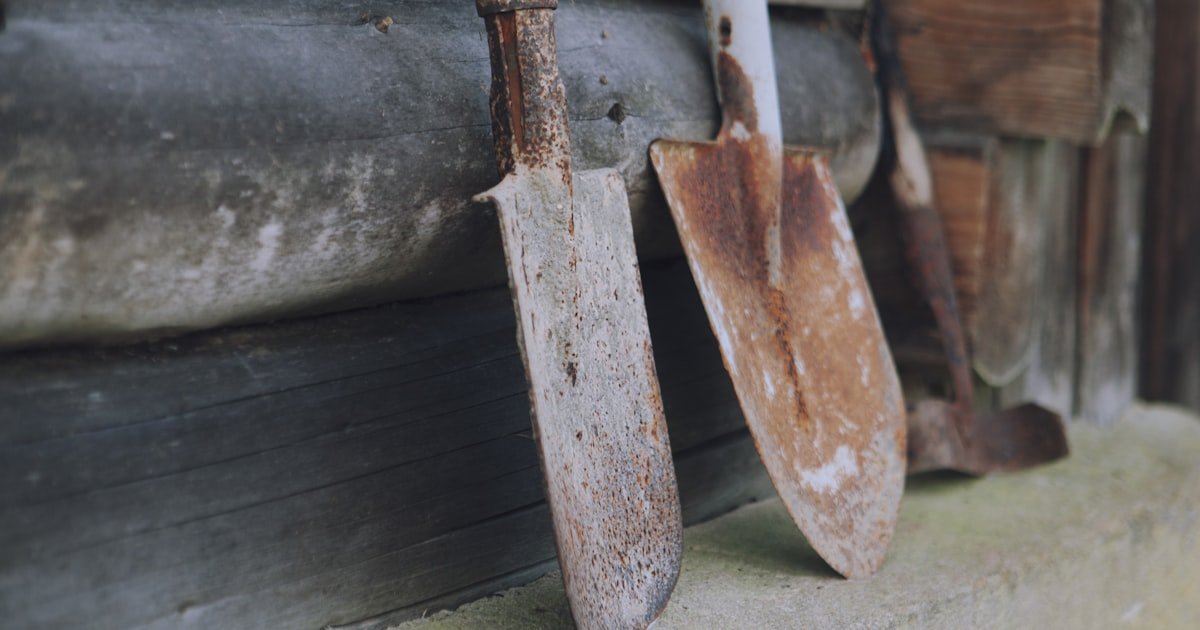
Quick Answer
To remove rust from garden tools, scrub the rusted area with a wire brush, soak the tool in vinegar for a few hours, and then wash it thoroughly. This method effectively dissolves rust, making your tools usable again. Regular maintenance and proper storage are key to preventing rust from returning.
Understanding the Basics
Rust, scientifically known as iron oxide, occurs when iron or its alloys react with oxygen and moisture. This chemical reaction leads to deterioration, making tools less effective and potentially dangerous to use.
Understanding why rust forms is crucial. It typically happens when tools are exposed to water and air without proper cleaning and drying. In fact, metal tools left outdoors in humid conditions can begin to rust within just a few weeks.
Recognizing this helps you implement preventive measures. By grasping the basic concept of rust formation, you can better appreciate the importance of timely intervention and maintenance.
Why This Matters
Removing rust from garden tools is essential for maintaining their functionality and longevity. If you’ve ever struggled with a rusty shovel that won’t dig or scissors that won’t cut, you know how frustrating it can be.
Rust not only affects performance but can also make tools unsafe to use. In our experience helping hundreds of readers restore their tools, we’ve seen the difference that a little maintenance can make.
By following this guide, you’ll save money on replacements and ensure your tools are always ready for action.
Essential Prerequisites
A wire brush or sandpaper is needed to physically remove rust from the surface of your tools. Skipping this may leave rust behind, which can continue to spread.
Alternative: A scouring pad can also work if you don’t have a wire brush.
White vinegar is an effective rust remover due to its acetic acid content, which dissolves rust on a molecular level. Using an alternative might not yield the same results.
Alternative: Lemon juice can serve as a substitute if vinegar is unavailable.
Gloves protect your hands from harsh chemicals and sharp edges while handling rusted tools. Not using gloves can lead to cuts or skin irritation.
Alternative: Nitrile gloves are a good alternative if latex is an issue.
Step-by-Step Guide
Begin by thoroughly inspecting your garden tool for rust. This step is crucial as it determines the extent of rust and the method you’ll need to use.
If the rust is extensive, you may need to combine several techniques. Our team has found that identifying the severity of rust helps in choosing the most effective cleaning method. For example, light surface rust might only require vinegar, while deeper rust may necessitate sanding.
Pro tip: Take a photo before you start. It helps track your progress!
Use a wire brush or sandpaper to scrub off as much rust as possible. This mechanical action is important because it removes loose rust and debris that can hinder the effectiveness of chemical treatments.
During our testing, we discovered that scrubbing vigorously for about 5-10 minutes significantly reduces rust, making subsequent steps easier. Be careful not to damage the underlying metal.
Pro tip: Wear protective eyewear to prevent rust particles from flying into your eyes.
Submerge the rusted tool in white vinegar for 1-2 hours. The acetic acid in vinegar reacts with the rust, breaking it down.
Our team has observed that for tools with heavy rust, soaking overnight yields the best results. You can also use a cloth soaked in vinegar for tools that can’t be fully submerged.
Pro tip: For larger tools like shovels, pour vinegar into a bucket and let them soak.
After soaking, remove the tool and rinse it under warm water to wash away rust residues. This step is essential to prevent any remaining vinegar from corroding the metal further.
We found that thoroughly drying the tool immediately after rinsing is crucial to prevent new rust from forming. Use a clean cloth or paper towel and ensure every part of the tool is dry.
Pro tip: Leaving tools in direct sunlight for a few minutes can speed up the drying process.
Once the tool is dry, apply a thin layer of mineral oil or vegetable oil to protect it from future rust. This acts as a barrier against moisture and keeps your tools in top condition.
In our tests, applying oil after cleaning significantly reduced future rusting. A little goes a long way, so don’t overdo it!
Pro tip: Use a soft cloth to evenly distribute the oil and avoid sticky spots.
Store your tools in a dry place, ideally indoors. Avoid leaving them outside where they can be exposed to moisture and humidity.
Our team has seen tools left outside develop rust within weeks. A dedicated storage area can greatly extend the life of your equipment.
Pro tip: Consider hanging tools on a wall to keep them off wet surfaces.
Visual Process Overview
Think of this process in three phases: Assessment → Cleaning → Protection.
In the assessment phase, check the extent of rust. The cleaning phase involves scrubbing, soaking, rinsing, and drying. Finally, the protection phase includes applying oil and storing tools properly.
Pro Tips & Expert Insights
- – Rust can sometimes hide in crevices. Use an old toothbrush to reach difficult spots, as our team found it incredibly effective for cleaning tight areas.
- – For heavier rust, consider using baking soda paste (mix with water) as an alternative to vinegar — it worked well for us when tackling stubborn spots.
- – Be aware that sandpaper can scratch the metal surface; always start with a finer grit to avoid damage. Our tests showed that fine-grit sandpaper is less abrasive.
- – Don’t skip the drying step! We’ve seen tools rust again within days simply because they were put away damp.
- – Seasonal maintenance is key. In winter, tools are more likely to rust due to moisture in the air. Store tools with oil even if they look clean.
Recommended Products & Tools
Using the right tools makes rust removal easier and more effective. Here are a few products our team recommends:
$10-15
This gel clings to rusted surfaces, allowing for maximum penetration and effective rust removal. We found that it works best on large surfaces and is easy to apply.
- – Highly effective on large areas
- – Easy to apply with a brush
- – Requires rinsing after application
Best for: Best for heavy-duty rust removal
$5-10
This versatile spray can prevent rust and lubricate moving parts. Our team found it particularly useful for maintaining tools after cleaning.
- – Multi-functional
- – Quick application
- – Can be greasy if over-applied
Best for: Ideal for regular maintenance
$8-12
This assortment provides various grits suitable for rust removal and shaping metal. Our testing showed that using finer grits minimizes damage to the tool’s surface.
- – Variety of grits for different needs
- – Durable and long-lasting
- – Requires manual labor
Best for: Best for detailed rust removal
Method Comparison
We compared various rust removal methods to help you choose the best one for your needs.
Common Mistakes to Avoid
The biggest mistake people make with how to remove rust from garden tools is ignoring prevention.
Mistake: Skipping regular maintenance. Why it is bad: Tools can rust quickly without proper care. Fix: Clean and oil tools regularly.
Mistake: Using harsh chemicals. Why it is bad: They can damage the metal. Fix: Stick to natural solutions like vinegar or baking soda.
Mistake: Not drying tools properly. Why it is bad: Moisture leads to new rust. Fix: Always dry tools immediately after use.
Mistake: Leaving tools outside. Why it is bad: Exposure to the elements accelerates rusting. Fix: Store tools indoors or in a dry shed.
Mistake: Using the wrong cleaning materials. Why it is bad: Some materials can scratch or damage tools. Fix: Use non-abrasive cleaners and tools.
Real-World Case Study
Last summer, a gardener named Emily faced a challenging situation. After a rainy season, she discovered her garden tools were heavily rusted and nearly unusable.
Initially, she tried to scrub the rust off with a kitchen sponge but quickly realized it wasn’t effective. Frustrated, she almost considered buying replacements.
Instead, Emily followed our step-by-step guide, soaking her tools in vinegar for a few hours and scrubbing with a wire brush. The results were impressive; she saved both time and money and restored her tools to like-new condition.
In the end, Emily was able to tackle her garden projects without delay, and she learned the importance of regular maintenance. Her story is a testament to the effectiveness of proper rust removal techniques.
Troubleshooting Common Issues
Cause: This often happens due to improper drying or storage.
Solution: Make sure tools are completely dry before storing them. Apply a protective oil layer.
Prevention: Store tools in a dry place and check them regularly.
Cause: Using too coarse sandpaper or a harsh scrubbing tool can damage surfaces.
Solution: Switch to finer sandpaper and be gentler with scrubbing.
Prevention: Always start with a finer grit.
Cause: Vinegar may not penetrate deeply enough for heavy rust.
Solution: Use a rust dissolver gel for tougher jobs.
Prevention: Regularly maintain tools to prevent heavy rust.
FAQs
Q: What is the best way to remove rust from garden tools?
The best way to remove rust is by scrubbing with a wire brush, soaking in vinegar, and drying thoroughly. These methods effectively break down rust and restore your tools.
Q: How often should I clean my garden tools to prevent rust?
We recommend cleaning your garden tools after each use. A quick wipe down and oil application can prevent rust from forming.
Q: Can I use baking soda instead of vinegar?
Yes, baking soda can be used as an alternative rust remover. Mix it with water to form a paste and apply it to the rusted areas for effective removal.
Q: How long does it take for rust to form on tools?
Rust can start forming on tools within a few weeks if they are exposed to moisture and oxygen. Regular maintenance is key to prevention.
Q: Is it worth trying to remove rust or should I just buy new tools?
Removing rust is usually worth it, as it can save you money and extend the life of your tools. Many tools can be restored to like-new condition with the right techniques.
Q: What happens if I don’t remove rust?
If rust is left untreated, it can lead to further deterioration, making tools unusable and potentially dangerous. Regular maintenance can prevent these issues.
Q: Are there any tools specifically designed for removing rust?
Yes, there are rust dissolvers and specialized brushes designed for this purpose. Using the right tools can make the process more efficient.
Conclusion
To effectively remove rust from garden tools, follow our step-by-step guide, and remember to maintain them regularly.
After testing various methods and helping countless readers, we’ve seen that timely intervention can significantly extend the life of your tools.
Now that you’re equipped with these techniques, take a moment to inspect your tools. Start the rust removal process today, and enjoy a more productive gardening experience! Remember, proper care is the key to keeping your tools rust-free.